
Best Kitchen Water Filtration System: How to Choose
The best kitchen water filtration system is not automatically the one with the most stages or the smallest number on the brochure. It is the system that treats the water issue you actually have, supplies enough flow...
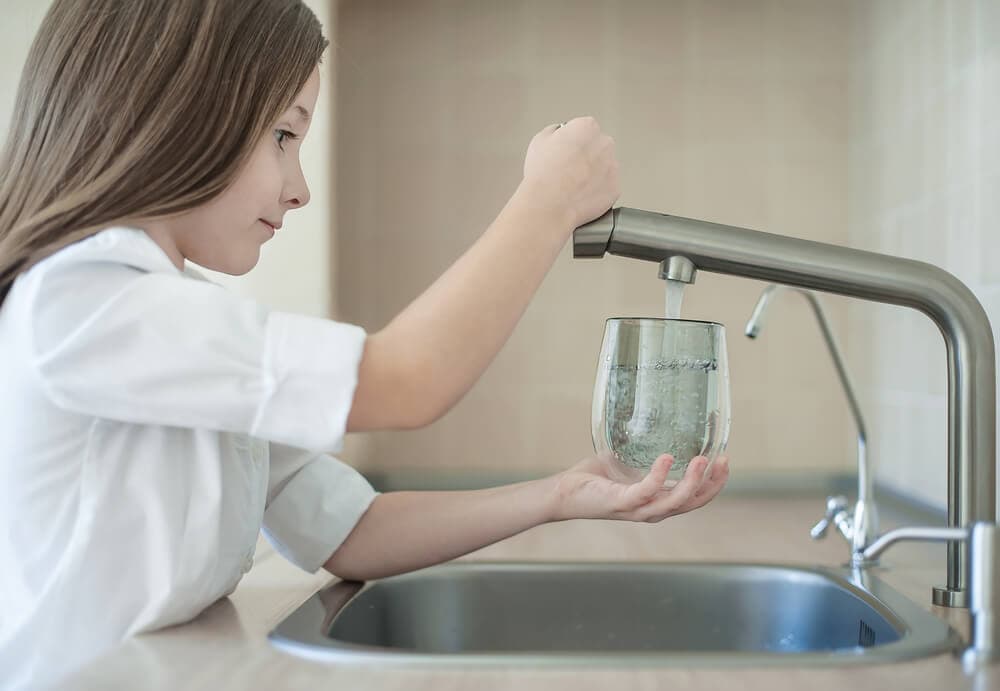
The best kitchen water filtration system is not automatically the one with the most stages or the smallest number on the brochure. It is the system that treats the water issue you actually have, supplies enough flow for daily use, fits the available space, and has verified performance for the exact contaminants of concern.
Start with the source. Public-water customers can review the utility's Consumer Confidence Report. Private-well users should test through a qualified laboratory. Water can also pick up lead, sediment, or taste problems inside the building's plumbing.
What Should a Kitchen Water Filter Do?
A kitchen system may be selected for one or more of these goals:
- Reduce chlorine taste and odor
- Reduce a verified contaminant such as lead or nitrate
- Address microorganisms in a private or compromised water source
- Reduce sediment or turbidity before drinking and cooking
- Adjust mineral content, pH, or taste
- Reduce dependence on bottled water
These are different jobs. A carbon cartridge that improves taste is not automatically a microbiological purifier. A membrane that reduces dissolved salts may also reduce minerals. A fine particle rating does not establish removal of dissolved chemicals.
Common Kitchen Filtration Options
Faucet-Mounted Filters
Faucet filters are compact and relatively easy to install. Many are designed mainly for chlorine taste, odor, and selected certified contaminants. Their capacity and flow are usually lower than larger under-sink systems.
Countertop Systems
Countertop units can be suitable for renters or kitchens where plumbing changes are limited. Some connect to the faucet, while others use a refillable reservoir. Check whether the system treats water continuously or in batches, and whether the exact model has verified claims for the target contaminant.
Under-Sink Carbon and Multi-Stage Filters
Under-sink systems offer more media volume and can provide better flow and capacity than small faucet filters. Carbon, sediment, ion-exchange, and specialty media may be combined. Each stage should have a clear purpose rather than simply increasing the stage count.
Reverse Osmosis
RO systems can reduce many dissolved contaminants when correctly designed and maintained. They may also reduce calcium, magnesium, and alkalinity, and they produce a reject-water stream. A post-filter or remineralization stage may be added for taste or water chemistry, but it should be evaluated separately.
Ultrafiltration and Other Membranes
Membranes can reduce particles and microorganisms according to their pore structure and validated performance. The technology name or micron number alone is not enough. Review whether the exact model was tested for cysts, bacteria, viruses, or another target.
Why Micron Ratings Need Context
A micron is a unit of size. It does not describe the chemistry of a contaminant or guarantee complete removal. Filters may also be rated as nominal or absolute, which are not interchangeable.
A very small rating can be relevant to suspended particles, but dissolved substances move differently through water. Gases, salts, hardness minerals, and many chemicals require media or membranes designed for those substances. This is why the CDC overview of home water treatment systems separates microfiltration, ultrafiltration, nanofiltration, reverse osmosis, UV, and other technologies by their actual treatment capabilities.
How to Compare Kitchen Water Filtration Systems
- Identify the water source and obtain current water-quality information.
- Choose the contaminants or characteristics that need treatment.
- Check independent certification for the exact model and claim.
- Confirm flow rate, daily capacity, and pressure requirements.
- Measure the cabinet space and review drain or electrical needs.
- Calculate cartridge, membrane, and service costs over time.
- Check how the system indicates that maintenance is due.
NSF/ANSI 42 commonly covers aesthetic effects such as chlorine taste and odor. NSF/ANSI 53 applies to specified health-effect contaminants. NSF/ANSI 58 covers reverse osmosis systems, while NSF/ANSI 55 applies to ultraviolet microbiological treatment. A certification only supports the claims listed for that exact model.
Where Lotus DY Fits
According to TipaTech's current product information, the Lotus DY is an under-sink drinking-water system designed around fine filtration and additional water-conditioning features. It is positioned as an alternative to conventional RO for households that want point-of-use treatment while retaining selected dissolved minerals.
Any statement about contaminant reduction, gas release, ORP, dissolved hydrogen, or mineral retention should be checked against the exact system configuration and its supporting test documents. A 0.007-micron description should not be converted into an automatic claim that every virus, chemical, gas, or microplastic is removed.
Households comparing multiple technologies can also review the guide to drinking-water filter systems.
Whole-House Treatment or Kitchen-Only Treatment?
A kitchen system is often enough when the main concern is drinking and cooking water. Whole-house treatment is more relevant when the issue affects showers, fixtures, appliances, sediment throughout the property, or chlorine at multiple taps.
More treatment is not always better. A household may need one system, two complementary systems, or no additional system after reviewing the water data. The design should follow the problem rather than the product catalog.
The Bottom Line
The best kitchen water filtration system matches verified performance to the household's water. Compare technologies by contaminant claim, flow, capacity, installation, maintenance, and finished-water characteristics. Clear evidence is more useful than a long list of unqualified promises.
Frequently Asked Questions
What is the best kitchen water filtration system?
The best system is the one whose verified performance matches the kitchen's water source and treatment goal. Taste and chlorine may call for carbon, while lead, nitrate, microorganisms, or dissolved salts may require different technologies.
Is an under-sink filter better than a countertop filter?
Under-sink systems usually provide higher capacity and keep the counter clear. Countertop systems are easier to install and move. Performance depends on the exact model, not only the installation style.
Does a small micron rating mean a filter removes every contaminant?
No. Micron ratings describe particle size performance under defined conditions. They do not by themselves establish reduction of dissolved chemicals, gases, viruses, or every particle smaller than the stated number.
Should a kitchen filter include reverse osmosis?
RO can be useful for many dissolved contaminants, but it is not necessary for every home. Testing, water use, reject-water considerations, maintenance, and the desired mineral profile should guide the decision.
How often should a kitchen filter be replaced?
Follow the exact manufacturer's schedule and capacity limits. Water quality, household use, pressure, and cartridge condition can shorten the practical service interval.
Frequently Asked Questions
Baruch Ziser
Founder & Senior Scientific Consultant
Baruch Ziser is the founder of TipaTech and a water filtration innovator with over 40 years of hands-on experience in ecological water treatment, mineral-preserving filtration, and household water quality engineering.
Educational & Editorial Note: This article is provided for educational and informational purposes only and does not constitute medical, plumbing, or regulatory advice. TipaTech systems are water treatment and filtration products, not medical devices. Performance and contaminant reduction vary based on source water quality, installation, and usage conditions.
Related Articles
More guides in Water Filtration Systems
Water Toxins and Filter Types: Match Treatment to the Problem
The phrase “water toxins” is broad. Drinking water can contain particles, microorganisms, metals, salts, gases, or organic chemicals, and each group behaves differently. The future of water treatment is not one...
Best Water Filter for Parasites and Bacteria: What Works
The best water filter for parasites and bacteria is one with a validated microbiological claim for the organisms in the water. A micron number by itself is not enough. Parasites, bacteria, and viruses differ in size,...
Water Filter for Your Home: Whole-House vs Under-Sink
A water filter for your home should solve a defined water problem, not simply promise "better water." The first decision is whether treatment is needed throughout the property or only at the kitchen tap. The second...