
Does Boiling Water Remove Contaminants? What It Kills and Leaves Behind
Boiling is one of the most useful emergency methods for making microbiologically unsafe water safer. It can inactivate many bacteria, viruses, and parasites. But boiling is not complete purification, and it should...
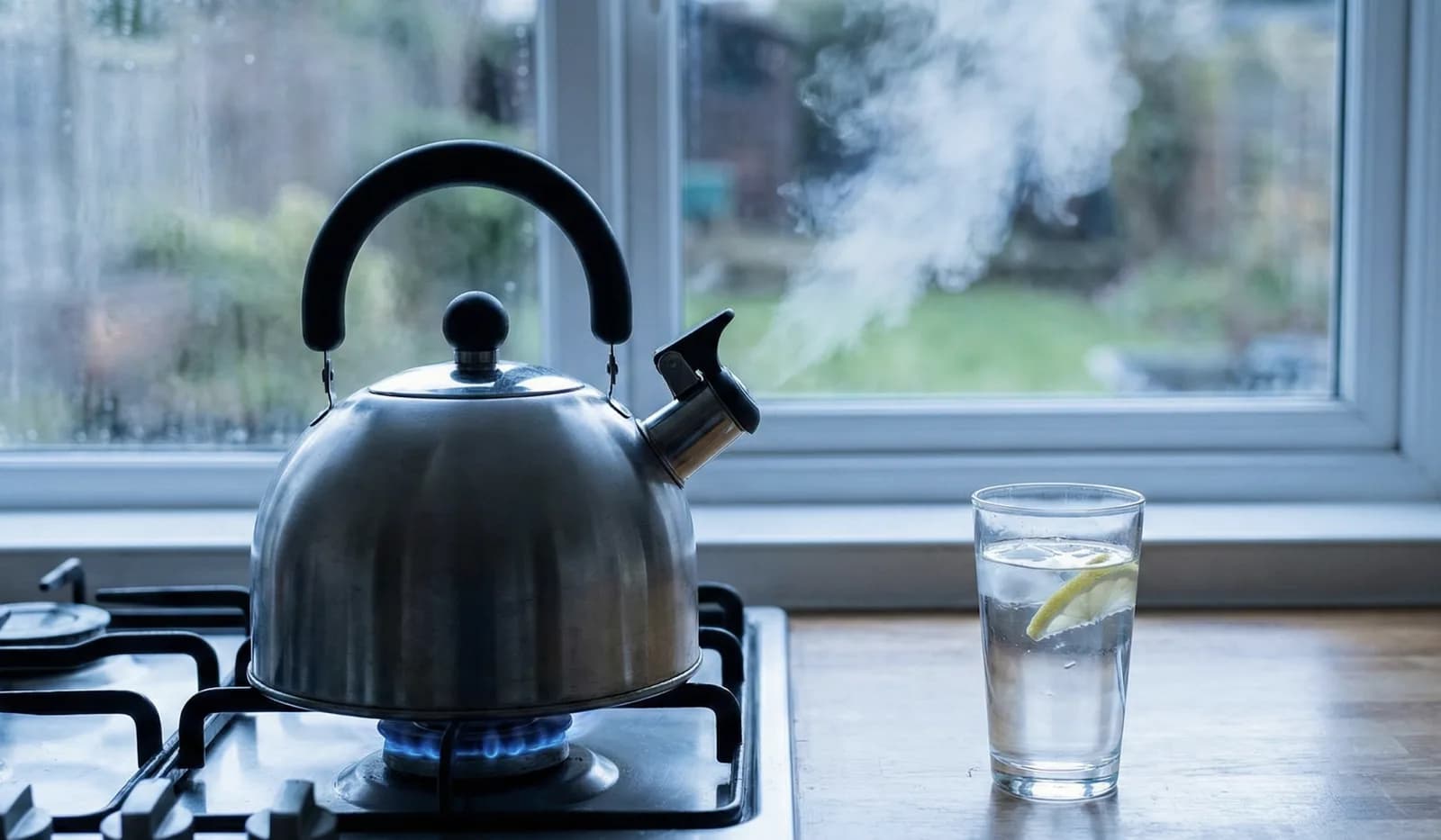
Boiling is one of the most useful emergency methods for making microbiologically unsafe water safer. It can inactivate many bacteria, viruses, and parasites. But boiling is not complete purification, and it should not be expected to remove lead, arsenic, nitrate, salts, or most dissolved chemicals.
The right question is not “Is boiling good or bad?” It is “What problem is present in the water?” A boil-water advisory usually addresses possible microbial contamination. A chemical spill, heavy-metal result, or saltwater intrusion requires different guidance.
What Boiling Water Can Do
Heat can inactivate many disease-causing microorganisms. During a microbiological advisory, follow the instructions issued by the local authority. The CDC boil-water advisory guidance commonly recommends bringing water to a rolling boil for one minute, with additional time at high elevation.
Boiling can be appropriate after loss of water pressure, a confirmed microbial problem, flooding, or an emergency notice. It does not remove dead organisms or sediment, so cloudy water may need to be settled and filtered before boiling, according to official emergency instructions.
What Boiling Does Not Reliably Remove
Lead and other metals
Metals do not disappear when water reaches its boiling point. If some water evaporates, a nonvolatile contaminant can become more concentrated in the remaining water. A lead or arsenic problem requires an approved alternative source or treatment documented for that contaminant.
Nitrate, sodium, and dissolved salts
Boiling is not a practical treatment for nitrate or salinity. These substances remain in the water. This is especially important for private wells and infant formula, where nitrate can be a serious concern.
Many industrial and agricultural chemicals
Boiling does not provide a universal solution for pesticides, PFAS, solvents, or pharmaceutical residues. Some volatile compounds may partly transfer to air, while others remain. The behavior depends on the exact chemical and conditions, so generalized claims are unsafe.
Hardness minerals
Boiling may cause some temporary hardness to precipitate as scale, but it does not fully remove calcium and magnesium. That is why kettles develop limescale. The remaining water is not equivalent to distilled or demineralized water.
Can Boiling Make a Chemical Problem Worse?
It can increase the concentration of a nonvolatile contaminant when water is lost as steam. The degree depends on evaporation. This does not mean every boiled glass becomes dangerous, but it is why authorities may tell residents not to boil water after a chemical contamination event.
Boiling Versus Filtration, Disinfection, and Distillation
- Boiling: heat-based microbial disinfection.
- Filtration: physical or adsorptive reduction of selected particles or chemicals.
- UV: inactivates selected microorganisms under defined conditions but does not remove chemicals.
- Reverse osmosis: can reduce many dissolved substances, depending on the membrane and system.
- Distillation: evaporates and condenses water separately, reducing many nonvolatile substances but requiring proper design.
No treatment method removes everything. EPA maintains information on regulated drinking-water contaminants, while WHO provides guidance on household water treatment and safe storage.
When a Filter Is the Better Tool
Use a laboratory test or an official utility notice to identify the concern. Then select a system with documentation for that exact contaminant, at the required flow and capacity. Taste improvement alone does not prove safety, and a micron rating alone does not establish reduction of dissolved chemicals.
A Simple Decision Guide
- If the notice says boil because of microbes, follow the boiling instructions.
- If the notice says do not use because of chemicals, do not boil unless authorities explicitly direct it.
- For a private well, test before choosing treatment.
- After installation, verify performance with follow-up testing where appropriate.
Bottom Line
Boiling is effective emergency disinfection for many microorganisms. It is not a universal contaminant-removal method. Match the response to the hazard: microbes may call for boiling, while metals, nitrate, salts, and many chemicals require an alternative source or targeted treatment.
Frequently Asked Questions
Does boiling water purify it completely?
No. Boiling is primarily a disinfection method. It can inactivate many microorganisms, but it does not reliably remove most dissolved chemicals, salts, or metals.
Does boiling water remove lead or arsenic?
No. Lead and arsenic are not destroyed by boiling. As water evaporates, the concentration of nonvolatile contaminants may remain the same or increase.
Does boiling water remove minerals?
Boiling does not demineralize water. Some hardness minerals may form scale or precipitate, while many dissolved minerals remain in the water.
How long should water be boiled during an advisory?
Follow the exact instructions from the issuing authority. U.S. public-health guidance commonly calls for a rolling boil for one minute, with longer times at high elevation.
Is boiled water the same as distilled water?
No. Distillation collects and condenses steam in a separate container. Simply boiling water and drinking what remains is not distillation.
Frequently Asked Questions
Baruch Ziser
Founder & Senior Scientific Consultant
Baruch Ziser is the founder of TipaTech and a water filtration innovator with over 40 years of hands-on experience in ecological water treatment, mineral-preserving filtration, and household water quality engineering.
Educational & Editorial Note: This article is provided for educational and informational purposes only and does not constitute medical, plumbing, or regulatory advice. TipaTech systems are water treatment and filtration products, not medical devices. Performance and contaminant reduction vary based on source water quality, installation, and usage conditions.
Related Articles
More guides in Water Treatment Methods
Chloramine vs. Chlorine: Differences, Filters, and Removal Limits
Chlorine and chloramine are both used to control microorganisms in public drinking water, but they are not interchangeable. Their chemistry, persistence, and treatment requirements differ, which is why a filter that...
Chlorine in Shower Water: Effects, Limits, and Treatment Options
Many public water systems use chlorine or chloramine to control microorganisms. That residual protects water as it moves through distribution pipes. It can also affect taste, odor, and the shower experience,...
Can Reverse Osmosis Add Minerals Back? What Remineralization Does
Reverse osmosis can be paired with a stage that adds minerals back to the treated water, but the RO membrane itself does not perform that step. Remineralization happens after filtration through a cartridge, blending...